


Quick-service restaurants, fast-casual concepts, ghost kitchens, full-service takeout operations, grocery prepared-food departments, and convenience stores all depend on packaging to move meals beyond the kitchen.
Popular delivery items such as fries, fried chicken, burgers, pasta, curries, salads, grain bowls, soups, and combination meals create very different packaging demands. Some release steam. Others contain sauces, oils, or dressings. Multi-component meals may include hot, cold, crispy, and moist foods in the same order.
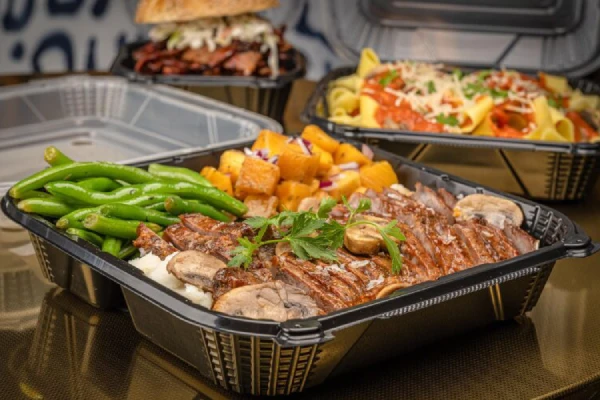
Food can leave the kitchen correctly prepared and still arrive soggy, lukewarm, leaking, crushed, or mixed together. Many food delivery packaging problems begin when the container does not match the food or the conditions it will face during delivery.
How Packaging Affects Food Quality During Delivery
Freshly prepared food continues to change after it is packed. Hot food releases heat and moisture, sauces move as the order is carried, and different components can shift during sudden stops or turns.
A typical delivery order may go through several stages:
- The food is packed at serving temperature.
- The container is closed and stacked with other items.
- The order waits on a pickup shelf.
- It is placed inside a takeout or delivery bag.
- It moves, tilts, and experiences temperature changes.
- It may wait again before the customer opens it.
Throughout this journey, the container can influence:
- Temperature retention
- Moisture and condensation
- Crispness and texture
- Leakage and spill protection
- Meal separation
- Food presentation
- Reheating convenience
Understanding how packaging affects food quality during delivery starts with what happens inside the package after the lid closes.
Condensation in Food Containers Can Destroy Texture
Hot food naturally releases steam. When that steam reaches a cooler lid, it can form water droplets that fall back onto the meal.
This process creates condensation in food containers, one of the most common causes of poor takeout texture.
Foods that are especially vulnerable include:
- French fries
- Fried chicken
- Wings
- Breaded seafood
- Toasted sandwiches
- Roasted vegetables
- Grilled foods
A package may keep these foods warm while still allowing them to become soft or soggy.
Vented packaging helps manage steam by giving moisture a controlled path out. Clover™ hinged containers combine ventilation with leak-resistant, stackable polypropylene construction for hot and cold applications.
ProView™ containers use a clear, vented top and black base to help manage moisture while keeping the meal visible and presentable.
The goal is not to release all the heat. It is to reduce excess moisture without compromising the food’s overall temperature.
A Tight Closure Can Still Be the Wrong Closure
A secure closure is essential, but the same closure style does not work for every meal.
If a container does not close securely enough, sauces and liquids may escape. If a steam-heavy meal is sealed too tightly without ventilation, moisture can build up inside.
Sauce-heavy foods place additional pressure on packaging:
- Pasta with marinara or cream sauce
- Curries
- Barbecue
- Wings with sauce
- Rice-based entrées
- Foods served with gravy
- Soups and stews
- Salads with dressing
One leak can damage more than a single meal. It can weaken a takeout bag, stain other packages, remove sauce from the entrée, and create a poor customer experience before the order is opened.
Smart2Go containers provide a two-piece, stackable format designed to support leak resistance, visibility, and transportation for hot and cold prepared foods.
For sauce-heavy meals, closure performance should be tested under movement, not only while the package sits flat on a counter.
The Wrong Container Size Can Damage the Meal
Choosing the correct size is not only a portion-control decision. It also affects how food moves and holds its shape during delivery.
When the container is too small
- Food presses against the lid.
- Toppings become compressed.
- Sauces are pushed toward the closure.
- The package may not close correctly.
- Steam has less room to circulate.
When the container is too large
- Food shifts during turns and braking.
- Separate components can mix.
- Presentation is lost.
- The portion may appear smaller than intended.
When the container is too shallow
- Bulky foods overload the base.
- Sauces reach the closure more easily.
- Heavy entrées may deform the package.
The best fit gives the meal enough space without allowing excessive movement.
Mixed Foods Can Ruin One Another
Combination meals often contain foods with conflicting packaging needs. A crispy item may be packed beside sauce, or a hot entrée may share space with a cold garnish.
Common examples include:
- Fried chicken with mashed potatoes
- Barbecue with sides
- Breakfast platters
- Rice, protein, and vegetable combinations
- Entrées served with sauces or dips
- Meals containing both crisp and moist foods
Compartments and close-off features can help protect texture, temperature, and presentation by keeping foods in their intended sections.
ProView™ Close-Off containers are relevant for meals that need separation during transport. Their compartmented structure helps keep components organized, while the clear lid supports food visibility and order identification.
Stacking Can Create Hidden Packaging Failures
Restaurants rarely transport only one container. During busy service periods, multiple packages may be stacked on pickup shelves or inside delivery bags.
Poor stacking can cause:
- The bottom container to bend or collapse
- A lid to press against the food
- Vent openings to become blocked
- Containers to slide inside the bag
- Heavy meals to destabilize the entire order
Operators should test whether containers remain stable when stacked with the typical number of meals in an order. Ventilation should also remain functional when packages are placed on top of one another.
Stackable formats such as Clover™ and ProView™ are designed to support storage, staging, and transportation without treating stacking as an afterthought.
Match the Packaging Response to the Problem
| Delivery problem | Foods most affected | Packaging response | Genpak example |
|---|---|---|---|
| Trapped steam | Fries, wings, fried chicken | Vented lid | Clover™ or ProView™ |
| Leaks and spills | Pasta, curries, sauced entrées | Secure, leak-resistant closure | Smart2Go |
| Mixed components | Combo meals and meals with sides | Compartmented design | ProView™ Close-Off |
| Heat loss | Heavy hot entrées | Insulating material | Genpak Foam |
| Crushing or shifting | Burgers, bowls, composed meals | Correct size and rigid structure | Menu-specific format |
| Difficult reheating | Prepared meals and leftovers | Microwave-compatible material | Clover™ or ProView™ |
Test Packaging Under Real Delivery Conditions
An empty container cannot show how it will perform with hot, heavy, or sauce-rich food.
Before introducing a new format, operators should:
- Pack the actual menu item at its normal serving temperature.
- Close it the same way employees would during a rush.
- Stack it with the average number of containers in an order.
- Place it in the usual takeout or delivery bag.
- Move and tilt the bag to simulate transportation.
- Wait for the typical delivery time.
- Check temperature, condensation, texture, leakage, and presentation.
- Test opening, storage, and reheating.
Testing should begin with high-volume delivery items and foods that receive the most customer complaints.
Protect Food Quality Beyond the Kitchen
A container can arrive closed and undamaged while the meal inside has already lost its crispness, temperature, structure, or presentation. Packaging performance should therefore be judged by the condition of the food at the end of the delivery journey, not only by how securely the order leaves the kitchen.
Operators should begin with the menu items that are hardest to deliver successfully, then test whether improved venting, stronger closures, better separation, or added rigidity changes the result. A side-by-side comparison after a realistic holding and delivery period can reveal where the current package is protecting the meal and where it is quietly reducing quality.
Use Genpak’s delivery and takeout packaging to compare vented, leak-resistant, compartmented, and insulated formats for the menu items most likely to lose quality in transit.