


Fast casual kitchens are built around speed, but speed does not come from one place. It comes from dozens of small decisions working together: menu design, prep flow, staffing, station setup, order routing, expo, pickup shelves, and delivery handoff.
That includes the container staff reach for at expo, the lid they need to match during rush periods, and the way finished orders are stacked before pickup or delivery handoff.
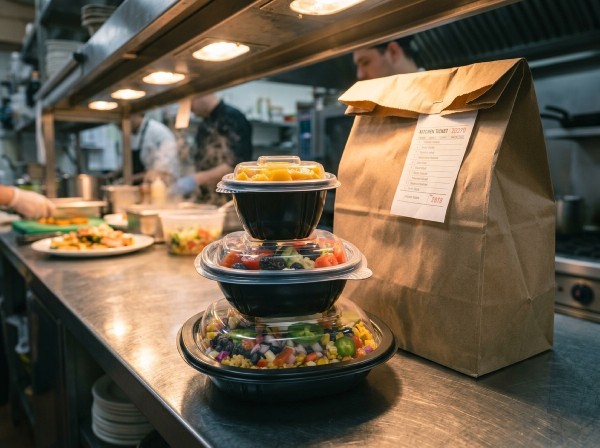
That matters even more for fast casual menus built around high-volume items like bowls, salads, sandwiches, wraps, chicken, tacos, sauces, sides, catering orders, and prepared grab-and-go meals.
In restaurants, the wrong container can add friction to every order. A lid that is hard to match, a bowl that does not stack cleanly, a container that has to be reopened for order checks, or a package that needs extra wrapping before it leaves the kitchen can all slow the line. One small delay may not seem like much. Repeated across lunch rush, dinner rush, mobile orders, third-party delivery, and catering, it becomes an operations problem.
For emerging restaurant brands, smarter packaging choices can support fast casual operations efficiency by helping teams pack faster, stage orders more cleanly, and protect food quality after the handoff.
Fast Casual Kitchens Are Carrying More Order Types Than Ever
Fast casual used to be easier to visualize: guests ordered at the counter, food moved down the line, and the meal was handed over or served in the dining room. Today, the same kitchen may be handling:
- dine-in orders
- mobile pickup
- third-party delivery
- curbside orders
- drive-thru or pickup-window orders
- catering and group orders
- grab-and-go meals
- digital order volume during peak periods
That mix puts pressure on ticket times. The kitchen is not only cooking food. It is routing orders, checking accuracy, separating hot and cold items, staging bags, managing drivers, and trying to keep presentation consistent.
That is where packaging for fast casual restaurants becomes more than a container choice. It becomes part of the workflow.
Where Packaging Slows Down the Line
When ticket times start to climb, operators often look first at labor, equipment, prep, or technology. Those are important, but packaging can quietly create delays too.
Packaging can slow a kitchen when staff have to:
- search for the right container or matching lid
- move food into a second container because the first one does not fit
- add foil, film, stickers, sleeves, or extra bags to prevent leaks
- reopen containers to confirm what is inside
- separate sauces, sides, and entrées after the order is already bagged
- re-pack food because it shifted, steamed, leaked, or lost presentation
- stack orders carefully because containers are unstable
- explain too many packaging rules to new employees
The goal is simple: the container should not add a step. It should help remove one.
That is the heart of takeout packaging efficiency.
Start With the Food That Drives Volume
A strong packaging system starts with the menu items that move most often. Fast casual brands usually scale around repeatable, high-volume food categories such as:
- grain bowls and protein bowls
- salads and cold prepared meals
- burgers and chicken sandwiches
- tacos, wraps, and handhelds
- wings, tenders, fries, and crispy sides
- pasta, barbecue, and sauced entrées
- soups, dressings, dips, and condiments
- family meals, bundles, and catering orders
- refrigerated grab-and-go meals
Each category needs something different. Bowls need secure lids, stacking strength, and visibility. Crispy foods need packaging that helps avoid excess moisture buildup. Sauced entrées need leak resistance. Premium meals need strong presentation. Sides and sauces need portion control. Delivery and pickup orders need containers that can move from line to bag to shelf to car without creating another problem.
Genpak’s hinged containers can support close-and-go packing for everyday takeout and delivery items where speed and portability matter.
For bowl-heavy menus, Grab-A-Bowl containers offer a strong fit for salads, grain bowls, prepared meals, hot sides, and cold applications. For dressings, dips, sauces, and add-ons, portion cups help standardize the small details that affect both order accuracy and food cost.
Smarter Packaging Choices for Common Kitchen Bottlenecks
Fast casual operators do not need packaging that looks good only in a product photo. They need packaging that works during rush periods.
| Kitchen Bottleneck | Smarter Packaging Choice | Why It Helps | Genpak Fit |
|---|---|---|---|
| Staff lose time matching lids and bases | Use clear container families with simple lid/base compatibility | Faster training and fewer wrong-package moments | Grab-A-Bowl |
| Expo needs to verify orders quickly | Use clear lids or high-visibility containers | Teams can check orders without opening every container | ProView™ |
| Sauced items leak during pickup or delivery | Use leak-resistant containers with secure closures | Cleaner handoffs and fewer re-packs | Clover™ |
| Bowls crowd the staging area | Use stackable bowl systems | Better pickup shelf organization and easier transport | Grab-A-Bowl |
| Sides and sauces are missed | Standardize portion cup sizes by menu use | Faster checks and better portion control | Portion Cups |
| Premium entrées lose appeal off-premises | Use containers that support presentation and travel | Better guest experience when the meal is opened | ProView™ |
| New employees choose different packaging | Reduce the approved SKU list | Less guesswork and faster station execution | Genpak product families |
Packaging does not fix ticket times by itself. But when it supports the station setup, menu flow, and training system, it can help reduce avoidable friction.
Make Expo Easier to Run
The expo station is often where fast casual operations either stay organized or start to break down. This is where dine-in orders, mobile pickup, delivery drivers, curbside bags, and catering tickets can all collide.
Smarter packaging helps expo teams move faster because it supports visibility, stacking, and accuracy.
Clear lids can help staff verify items without reopening the package. Stackable containers can keep pickup shelves and delivery staging zones cleaner. Portion cups can make sauces, dressings, and add-ons easier to check before the bag leaves the restaurant. Secure closures can reduce the need for extra handling once the order is packed.
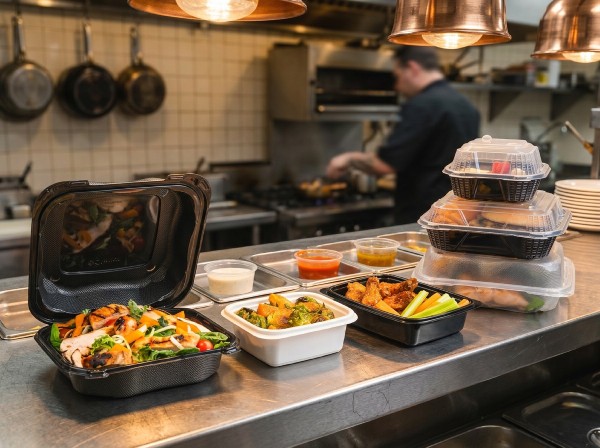
Genpak ProView™ containers are especially relevant here because they combine back-of-house efficiency with a stronger customer-facing presentation. Their clear, vented lids and black bases help showcase meals while supporting takeout and delivery performance. For bowl concepts, Grab-A-Bowl supports visibility, stacking, transport, and hot or cold applications.
Build a Packaging System, Not a Random SKU List
For emerging restaurants, packaging should not be built one manager decision at a time. As a brand grows, packaging needs to become part of the operating playbook.
A fast casual packaging system should define:
- the approved container for each menu category
- which lids match which bases
- approved substitutions
- hot vs. cold packaging rules
- crispy vs. sauced item packaging rules
- portion cup sizes by sauce, dressing, or side
- staging rules for pickup and delivery
- storage locations by station
- reorder points and case-pack expectations
- training notes for new employees
This matters because fast casual kitchens depend on repetition. The easier it is for staff to identify, fill, close, stack, and stage the right container, the easier it is to keep the line moving.
Too many packaging SKUs can slow down operations. A tighter system helps simplify storage, reduce mistakes, and make new-store openings easier to manage.
Protect Speed Without Sacrificing Food Quality
Reducing ticket times should never mean sending out food that does not represent the brand well. Fast casual guests still expect the meal to arrive hot, fresh, intact, and easy to eat.
Genpak’s restaurant food service packaging is designed for off-premises dining needs, including portability, leak resistance, stackability, microwave-safe use, and meal presentation. Clover™ hinged containers can support hot and cold foods where operators need dependable performance, secure handling, and cleaner transport. Genpak polypropylene food containers are designed for operator efficiency, travel performance, presentation, and microwavable applications.
That combination matters in fast casual kitchens because the best packaging supports both sides of the operation: speed for the team and quality for the guest.
Ready to Reduce Friction in the Fast Casual Kitchen?
Ticket times are shaped by many moving parts: labor, prep, equipment, order volume, menu complexity, station design, and technology. Packaging is one of the easier pieces to overlook, but it can affect how quickly orders are packed, checked, staged, and handed off.
For fast casual operators, the right container can help reduce extra steps, support cleaner order flow, and protect the meal after it leaves the line. Smarter packaging choices will not solve every operational challenge, but they can make the kitchen easier to run during the moments when speed matters most.
Genpak can help fast casual operators match containers to the menu items, order channels, and kitchen workflows that shape speed during peak periods.